How To Outsmart Your Boss In Lidar Navigation
Why Choose a Robot Vacuum With Lidar Navigation? Using Lidar technology for navigation, these robots create real-time maps of the environment and can work more effectively around obstacles. This helps them achieve superior cleaning results in less runs and shorter battery runtimes. Some robots with lidar navigation use bump sensors to avoid hitting walls or large furniture. These sensors can cause confusion when the robot comes in contact with reflective or transparent surfaces. Cost The price of a robot vacuum is an important consideration when you are buying one, and different navigation systems come with different price points. Lidar is more expensive than other models, but it provides greater accuracy as well as compatibility with smart-home technology. The decision to upgrade to a higher-end system will depend on your home's size and complexity, and how important it would be to avoid crashing into furniture. A robot vacuum that uses lidar technology can create an image of the room and avoid obstacles like furniture. This feature reduces the number of missed spots and also saves time and money by avoiding repeated cleaning. It can also be beneficial for those who have pets or children, because the robot is less likely to scratch furniture by hitting it. Lidar operates by sending a pulse light into the room and measuring the time it takes for it to return to the sensor. This data is used to create the 3D virtual map of the room, allowing the robot to navigate more effectively and accurately around objects. In addition, it can operate in dark spaces in contrast to cameras that might not perform well in low light conditions. Another alternative for robot navigation is gyroscopes that are similar to motion sensors that are on your phone. They are cheap and efficient however, they don't provide the same level of detail as other technologies. They can detect obstacles such as furniture, but can't see things like wires and cables. 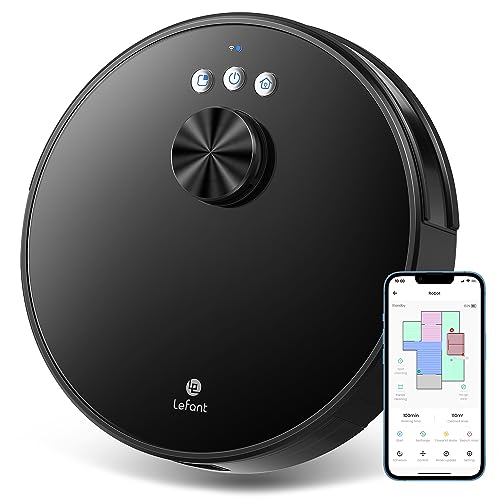 The best robots equipped with lidar can navigate between floor and furniture, preventing the vacuum from hitting items. You can also create virtual boundaries to keep out certain areas within the app. For instance, you can create a border in the kitchen area to prevent the robot from falling and damaging your appliances. This is also beneficial if you have young pets or children. You can keep your children from scratching on expensive furniture by putting up a virtual barrier. Accuracy Lidar technology uses lasers to determine distances between objects, resulting in a 3D map. This allows the robot to avoid obstacles with precision, and also reduces the risk of collisions. It is more accurate than any other mapping technology such as camera navigation. This is significant, since it means that the robot will be able to clean the entire house without having to go back to the same area repeatedly. Like cameras that use lasers, the lidar navigation robot vacuum does not depend on light for its operation. It emits a light invisible to the human eye. The sensors on the smart tech vacuum detect the light and use it to build a digital map of the space. best lidar robot vacuum allows the robot vacuum to move more efficiently and quickly and it is less vulnerable to changes in lighting conditions, such as shadows or bright sunlight. However this technology has some limitations. It is sometimes difficult to recognize surfaces that are transparent or reflective, such as glass or mirrors. Some manufacturers have overcome this issue by using additional sensors and algorithms. While the laser in the robot vacuum cleaner might seem scary, it's completely safe and non-hazardous. It is the same technology that is used in self-driving vehicles to avoid obstacles and map out environments. It is also utilized in the aerospace industry. The MagSlim LiDAR sensor was designed to be compact and efficient, so it can be integrated into the inside of a robot vacuum. This reduces the size of the machine which allows it to fit into narrow spaces and clean more areas. The sensor is also able to detect small objects, which other sensors may miss. This reduces collisions and boosts cleaning efficiency. A robot that relies on lidar navigation is also able to work in total darkness. Unlike camera-based vacuums, which require power sources and can't be used in total darkness, lidar is able to scan the room at night. It is also able to work in darkness and therefore, it is able to clean under couches and other furniture during the night. Time You may want to consider a robotic vacuum that has Lidar If you are looking for a high-quality vacuum that can map and navigate your house efficiently. Lidar is more expensive than other navigation systems, however it gives more precise and accurate mapping. Robots also follow optimized paths to help you save time and energy. This makes it an excellent alternative for people who live in areas with a lot of complexity, and it can help you cut down on the amount of time needed to clean your home. Lidar unlike other kinds of sensors can measure the time taken for light to bounce back off objects in the room. This helps build a real-time map of the surroundings. It is also able to detect obstacles and decide on the best route for cleaning. This system is also less prone to interference from other household appliances such as televisions and lights. Lidar can also assist in avoiding collisions with objects and walls. Other navigation systems rely on sound to detect obstacles. However, they are inaccurate and can cause robots to be unable to steer. Lidar, on the other hand, uses a laser to emit a signal that measures the amount of time it takes for the light to bounce off an object and return to a sensor. Lidar can be used for different purposes, such as finding objects that aren't moving and creating a map of the space. Certain manufacturers are beginning to make use of this technology for home security, as it can help prevent unwanted invaders from entering the home. Privacy experts are concerned that these devices could spy on users' homes. The first thing to consider when selecting a robotic vacuum is the cost. If price isn't an issue, you should choose the one with SLAM and Lidar navigation. There is no benefit to using another navigation system. Reliability Utilizing Lidar technology, robot vacuums can create an outline of your home and navigate it with precision. This allows them avoid obstacles and clean more efficiently. The sensors are also less affected by changes in lighting conditions than cameras. Lidar technology also offers an economical alternative to other mapping systems. Some robots recognize obstacles by using a variety sensors, in addition to Lidar. For instance the Dreametech RV30 Plus features cliff and edge detection to prevent your robot from falling off steps or ledges. It can also build virtual walls to prevent it from entering certain areas or rooms. This feature is great for keeping your robot out of the reach of children or pets. Some robots use gyroscopes for distance calculations. This technology has been in use for a long time and is used in aircrafts, cell phones, and ships. It is fairly inexpensive and can keep your robot from bumping against things. It cannot create a precise map or navigate like a robot using SLAM or Lidar navigation. Many robots use bump sensor to prevent collisions. However, they do encounter furniture and other items. This can be annoying and can cause damage to the furniture. For this reason, it is recommended to select the model that has lidar navigation. It will be able to avoid these problems and ensure that your furniture won't get damaged. Contrary to GPS, which converts variations in radio waves into location information, Lidar is a laser-based sensor that uses the reflection of light to identify objects and navigate. It can also be used to measure the size of objects and is a secure alternative to other types of sensors that may be subject to interference by electromagnetic fields. In addition it is more precise than other scanning techniques and can be used to scan smaller areas of the room. The accuracy of the navigation system and mapping algorithm determines the reliability of a robot vacuum. A high-quality robot that has reliable navigation will reduce cleaning errors and save time by not having to return to the same areas over again. It can also prevent furniture from getting scratched or scratched.